Moving money in Central Africa is everyday infrastructure. Families cover school fees, traders settle suppliers, and diaspora communities support relatives at home—often through a phone number and a mobile-money operator rather than a bank branch.
Understanding that landscape helps you read a transfer quote with clearer expectations: who the operators are, why a local move differs from a cross-border one, and what regional systems sit behind the rails.

In CEMAC, money movement is part of daily life—across cities, borders and diaspora links.
What CEMAC is
CEMAC—the Economic and Monetary Community of Central Africa—brings together six member states: Cameroon, the Central African Republic, Chad, the Republic of the Congo, Equatorial Guinea and Gabon. They share the Central African CFA franc (XAF) and a common central bank, the Bank of Central African States (BEAC).
That shared currency and monetary framework matter for transfers. Within the zone, many movements stay in XAF. Outside it, exchange-rate details appear in the quote when currencies differ. Availability still depends on the specific corridor, operator and product checks—not on membership alone.
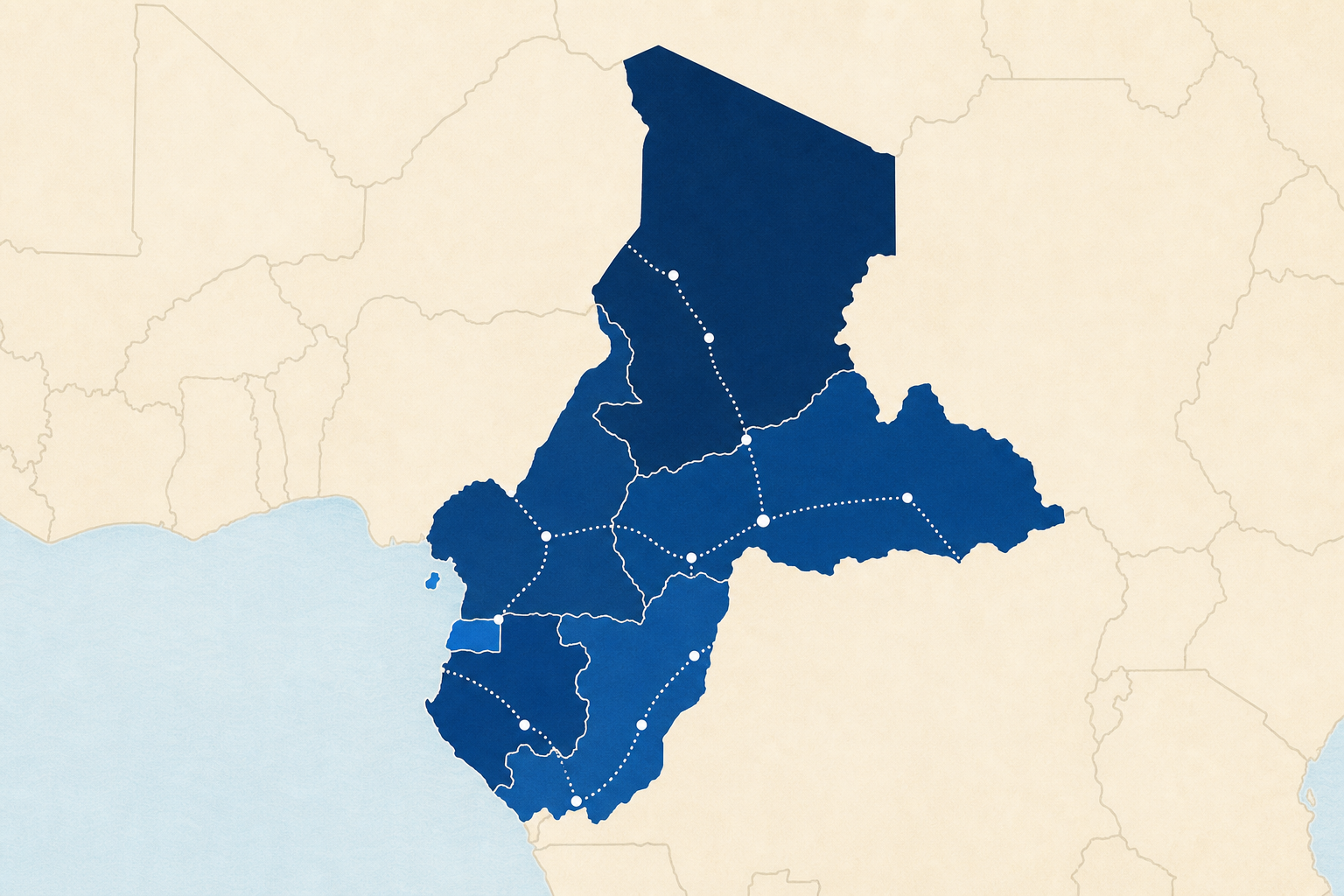
Six CEMAC members share the XAF and BEAC’s monetary framework; corridors still depend on operators and product availability.
Mobile money is the main rail
According to BEAC’s 2024 report on payment services in CEMAC, instant electronic transfers via mobile money accounted for about 94.34% of payment operations by volume—roughly 3.74 billion transactions. Cards and classic bank transfers trailed far behind.
The same report points to strong account growth: more than 51 million mobile payment accounts by end-2024, up roughly 28% year on year, alongside a dense network of service points. In practice, that means the “destination” of a transfer is often a wallet tied to MTN Mobile Money, Orange Money or another local operator—not a traditional bank account.
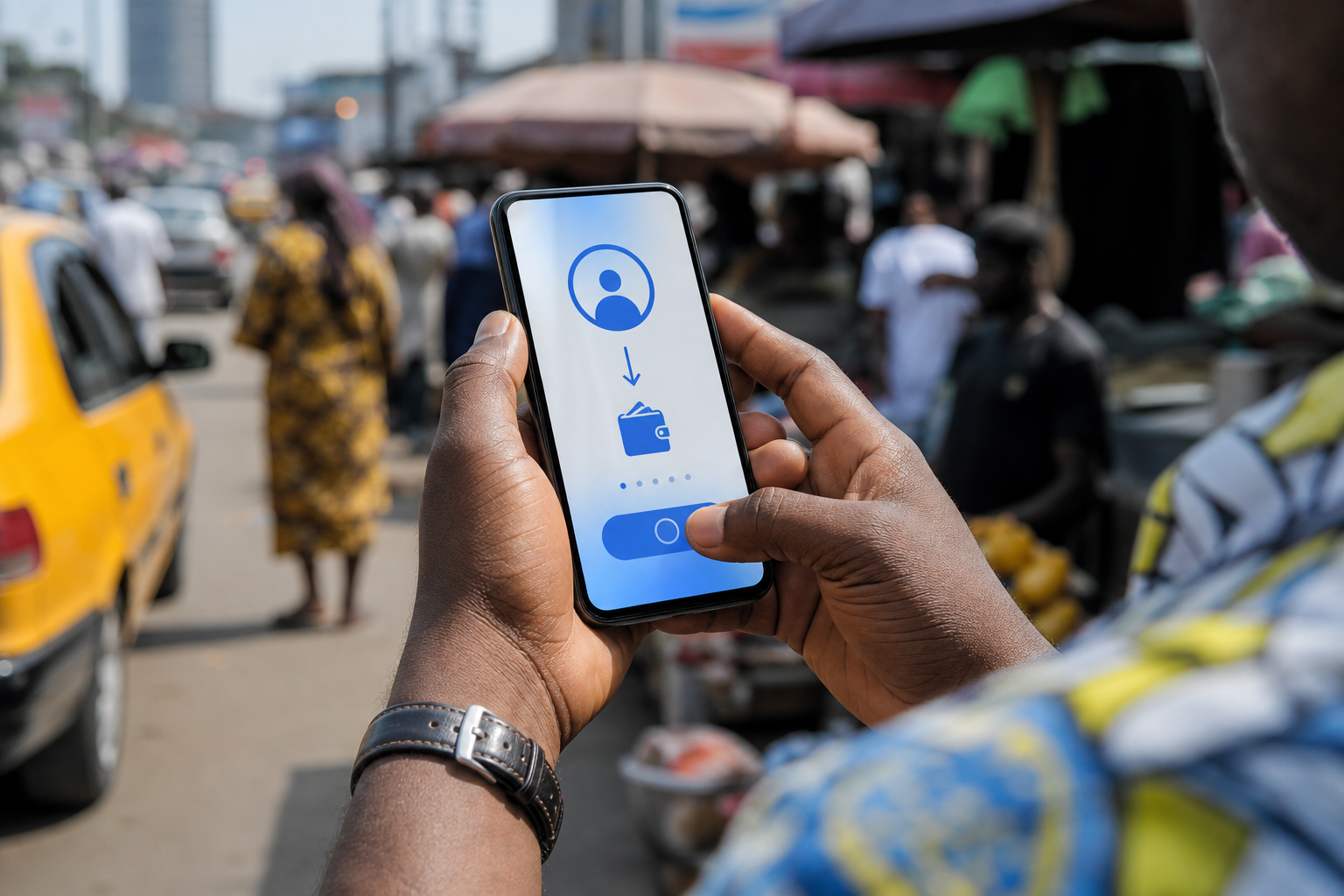
Mobile money now carries most electronic payment volume across CEMAC.
Diaspora inflows are shifting to wallets
International remittances into the region increasingly arrive on mobile wallets. Reporting based on BEAC’s 2024 data describes a sharp rise in inbound international transfers received on mobile money: transaction counts rose from about 2.91 million in 2023 to about 7.81 million in 2024, with total value climbing to around CFA 1,354 billion.
The European Union and North America remain major sources of those inflows. For recipients, that shift can mean faster access to funds without visiting an agent—provided the phone number, operator and KYC profile match what the sending corridor requires.

Diaspora funds increasingly land directly on mobile-money accounts.
Interoperability and GIMAC
Inside the region, interoperability between banks and mobile-money operators is a long-running project. The Central African Interbank Electronic Payments Group (GIMAC) operates platforms such as GIMACPAY to interconnect institutions and support card, mobile and transfer services across CEMAC.
GIMAC has also expanded toward outbound remittance use cases—sending from CEMAC wallets toward other African corridors—building on regional rails rather than ad hoc bilateral links alone. For users, the practical takeaway is simple: a smooth transfer still depends on whether your specific operators and corridor are connected for that movement.
What to verify before you send
Whether you move money locally in Cameroon or across a supported international route, the same checks keep a transfer calm:
- Confirm the recipient phone number and mobile-money operator
- Know whether the movement is local or cross-border, and which currencies apply
- Review fees, exchange-rate details where relevant, and the amount the recipient should receive
- Check the estimated delivery context shown for that quote
On Bumxpress, indicative fee ranges are published as guidance: local transfers typically 2.5% to 3.5%, and international transfers typically 5% to 15%, depending on the corridor and operator fees. The exact quote in the product flow remains the reference before confirmation.
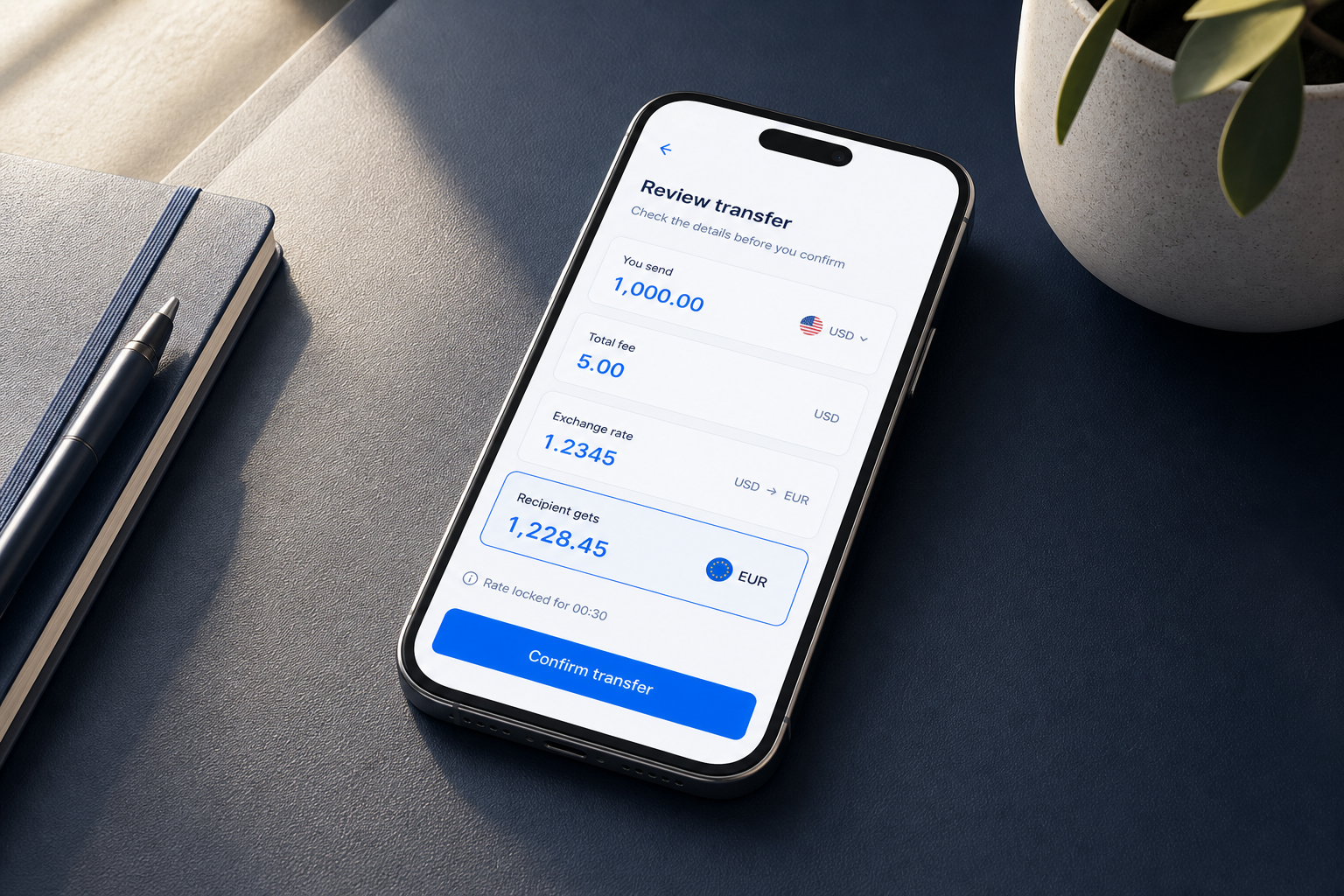
A clear quote puts amount, fees, FX and recipient context in one place before money moves.
What this means for Bumxpress readers
Bumxpress is building quote-first transfer experiences around documented markets and operators. Cameroon is a CEMAC market in that landscape; other corridors on the site may sit outside CEMAC entirely. A country appearing in regional economics does not by itself mean every route is available in every product.
For practical next steps, review Fees for indicative ranges, Coverage for documented markets and corridors, and Personal for how a consumer transfer flow is designed.
Availability, pricing, exchange-rate details and delivery information are confirmed for the exact transfer flow before confirmation. Regional statistics describe the market; they are not a promise of a specific quote or corridor.